CWE-502
AllowedDeserialization of Untrusted Data
Abstraction: Base · Status: Draft
The product deserializes untrusted data without sufficiently ensuring that the resulting data will be valid.
5487 vulnerabilities reference this CWE, most recent first.
GHSA-H29G-C9CX-C73Q
Vulnerability from github – Published: 2026-05-11 17:53 – Updated: 2026-05-11 17:53Summary
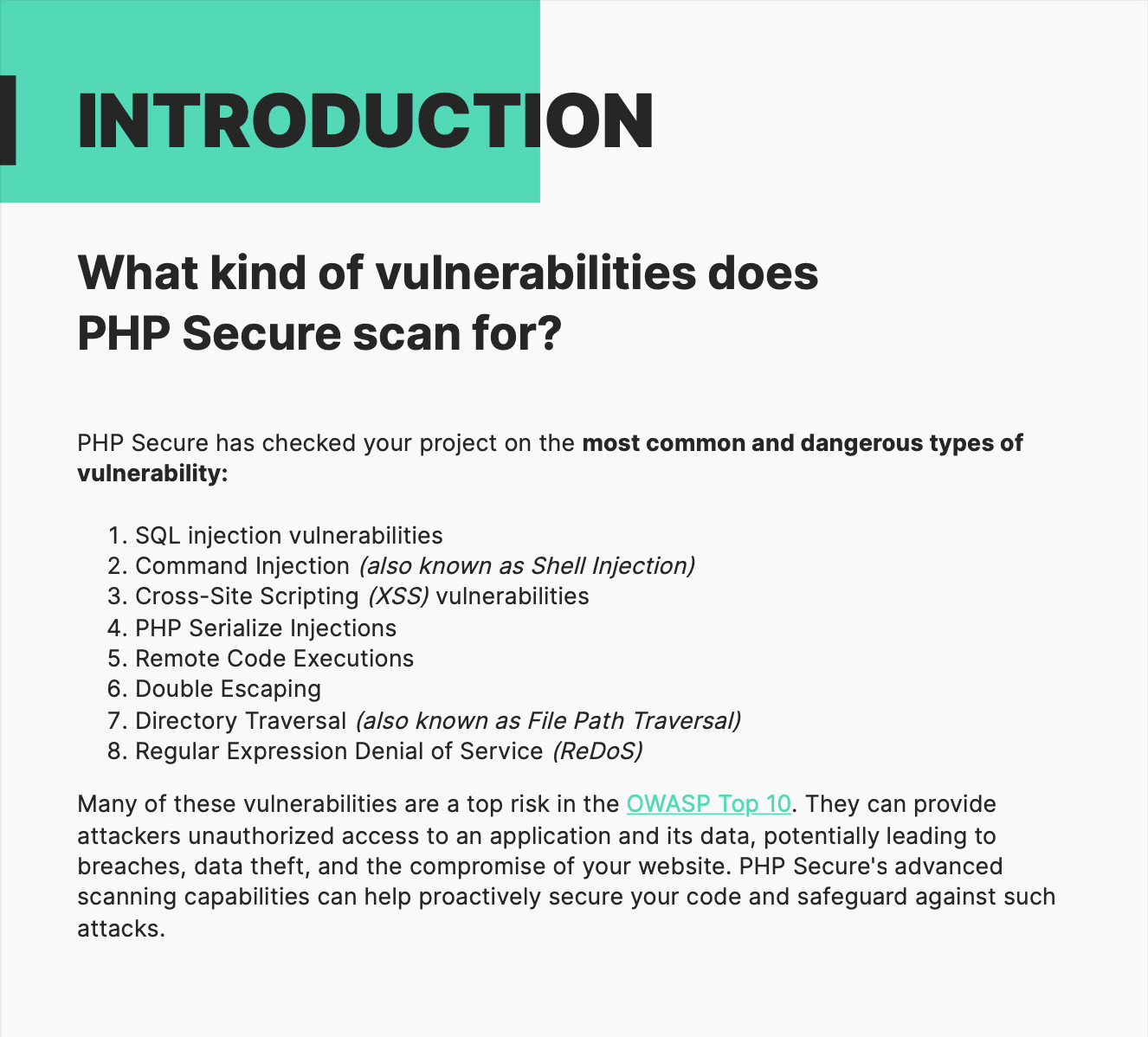
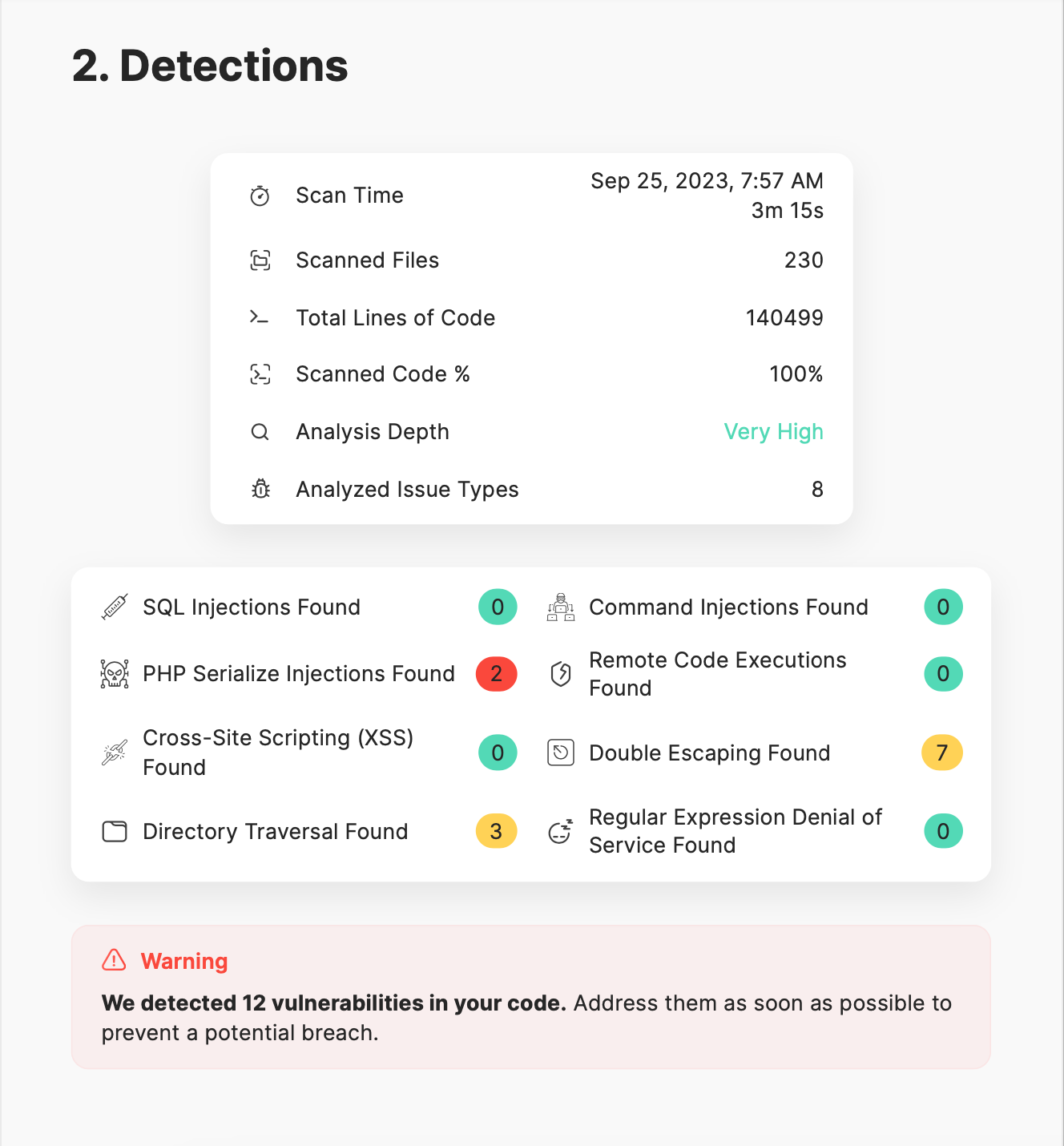
Hi, there. We've found PHP Serialize Injections in your project “torrentpier". According to the OWASP, it can pose a significant risk: enable an attacker to modify serialized objects in order to inject malicious data into the application code, resulting in code execution or an arbitrary reading of the file on any vulnerable system.
Details
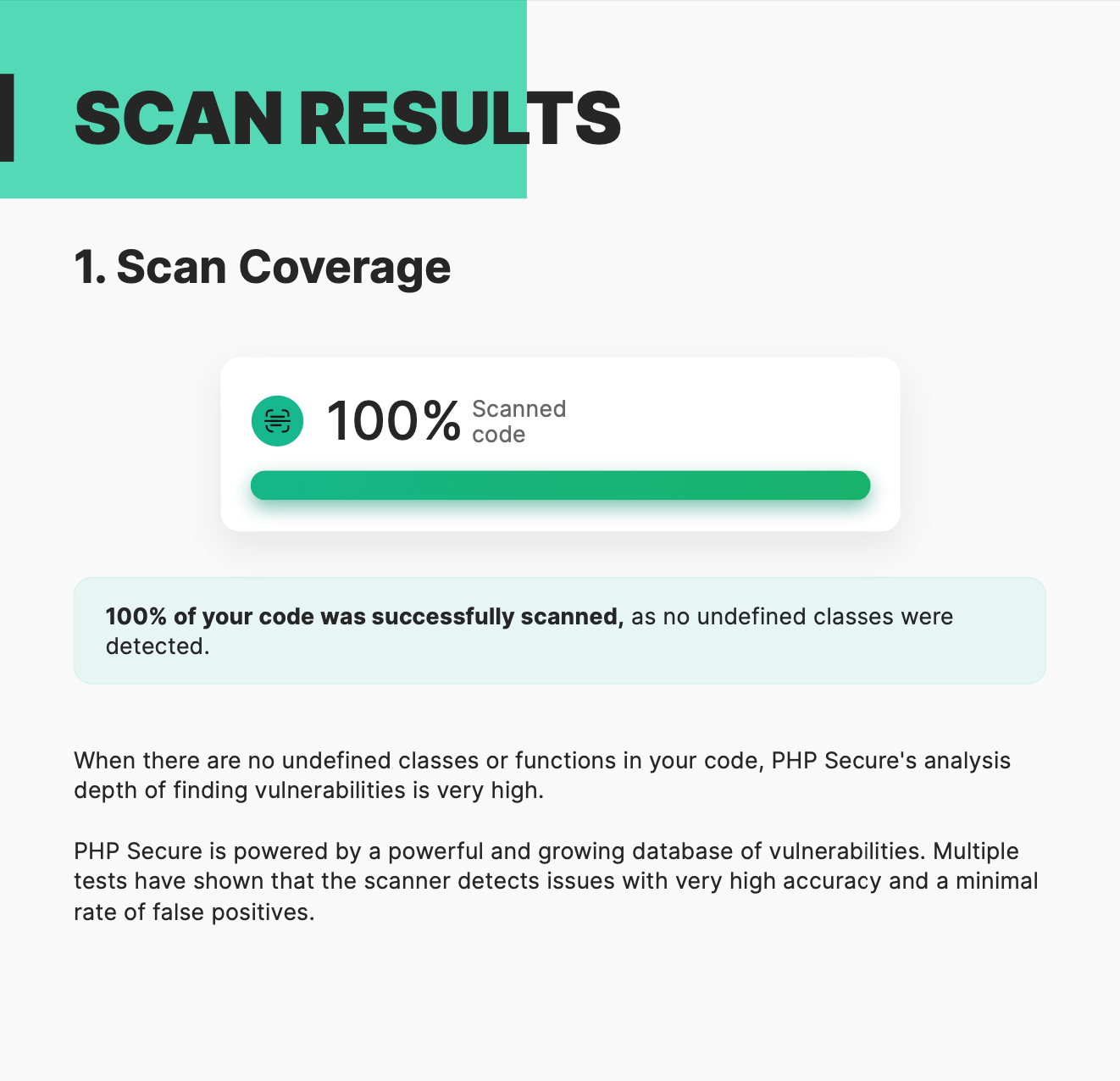
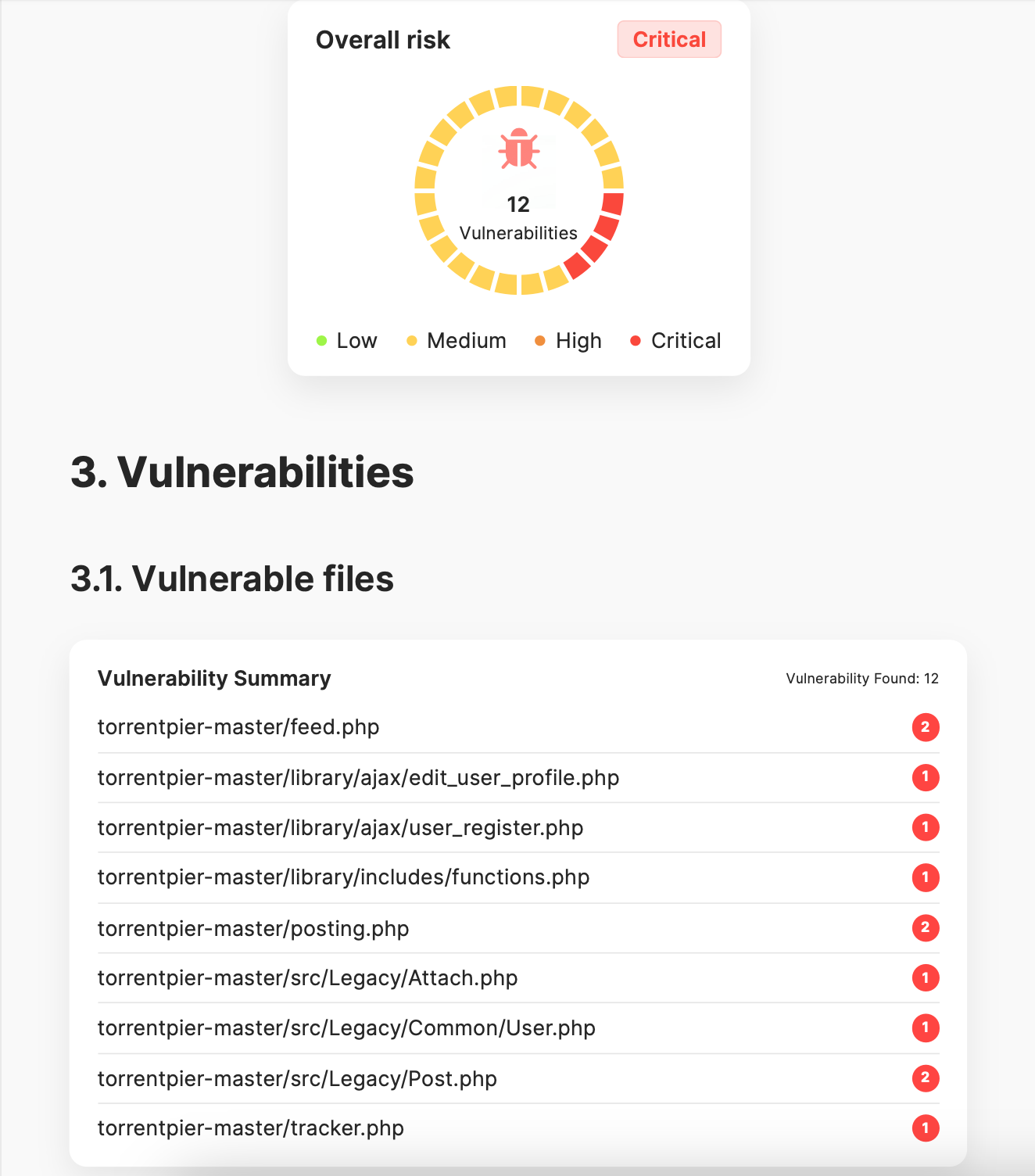
In the attachment you can find a report with the number of vulnerabilities, their types and the vulnerable files. To view the lines of vulnerable code you may scan your project with the "PHP Secure" vulnerability scanner with a full access to it.
PoC
About Us
We are a team of developers of the PHP Secure vulnerability scanner. First, we checked your code automatically. Then we reviewed the vulnerable code more deeply manually and felt it was necessary to report about it to you. We suggest you scanning your code and address vulnerabilities as soon as possible to prevent a potential breach.
If you have any questions, email us at support@phpsecure.net"
{
  "affected": [
    {
      "database_specific": {
        "last_known_affected_version_range": "\u003c= 2.4.3"
      },
      "package": {
        "ecosystem": "Packagist",
        "name": "torrentpier/torrentpier"
      },
      "ranges": [
        {
          "events": [
            {
              "introduced": "0"
            },
            {
              "fixed": "2.4.4"
            }
          ],
          "type": "ECOSYSTEM"
        }
      ]
    }
  ],
  "aliases": [],
  "database_specific": {
    "cwe_ids": [
      "CWE-502"
    ],
    "github_reviewed": true,
    "github_reviewed_at": "2026-05-11T17:53:20Z",
    "nvd_published_at": null,
    "severity": "CRITICAL"
  },
  "details": "### Summary\nHi, there. We\u0027ve found PHP Serialize Injections in your project \u201ctorrentpier\". According to the OWASP, it can pose a significant risk: enable an attacker to modify serialized objects in order to inject malicious data into the application code, resulting in code execution or an arbitrary reading of the file on any vulnerable system. \n                                        \n### Details\nIn the attachment you can find a report with the number of vulnerabilities, their types and the vulnerable files. To view the lines of vulnerable code you may scan your project with the \"[PHP Secure](https://phpsecure.net/?utm_source=github\u0026utm_term=torrentpier\u0026utm_content=torrentpier)\" vulnerability scanner with a full access to it.\n\n### PoC\n\u003cimg width=\"663\" alt=\"Screenshot 2023-09-25 at 11 12 32 AM\" src=\"https://user-images.githubusercontent.com/118765013/270273991-4a2c3884-3ab0-48ad-af77-3f3dbfa64e2a.png\"\u003e\n\u003cimg width=\"661\" alt=\"Screenshot 2023-09-25 at 11 12 43 AM\" src=\"https://user-images.githubusercontent.com/118765013/270274006-247ed9d3-2dc0-4a87-8f1f-89079c8be165.png\"\u003e\n\u003cimg width=\"664\" alt=\"Screenshot 2023-09-25 at 11 12 53 AM\" src=\"https://user-images.githubusercontent.com/118765013/270274018-b99d6ec2-4c5a-439f-b089-9e11345e963d.png\"\u003e\n\u003cimg width=\"662\" alt=\"Screenshot 2023-09-25 at 11 13 13 AM\" src=\"https://user-images.githubusercontent.com/118765013/270274023-36ecffc7-215d-41db-b3ba-6aa677e644d3.png\"\u003e\n\n### About Us\nWe are a team of developers of the PHP Secure vulnerability scanner. First, we checked your code automatically. Then we reviewed the vulnerable code more deeply manually and felt it was necessary to report about it to you. We suggest you scanning your code and address vulnerabilities as soon as possible to prevent a potential breach.\n\nIf you have any questions, email us at support@phpsecure.net\"",
  "id": "GHSA-h29g-c9cx-c73q",
  "modified": "2026-05-11T17:53:20Z",
  "published": "2026-05-11T17:53:20Z",
  "references": [
    {
      "type": "WEB",
      "url": "https://github.com/torrentpier/torrentpier/security/advisories/GHSA-h29g-c9cx-c73q"
    },
    {
      "type": "PACKAGE",
      "url": "https://github.com/torrentpier/torrentpier"
    }
  ],
  "schema_version": "1.4.0",
  "severity": [],
  "summary": "torrentpier has PHP Serialize Injections"
}
GHSA-H2JC-95W4-3PPP
Vulnerability from github – Published: 2026-06-17 18:35 – Updated: 2026-06-17 18:35Unauthenticated PHP Object Injection in Fidalgo <= 1.2.2 versions.
{
  "affected": [],
  "aliases": [
    "CVE-2026-39554"
  ],
  "database_specific": {
    "cwe_ids": [
      "CWE-502"
    ],
    "github_reviewed": false,
    "github_reviewed_at": null,
    "nvd_published_at": "2026-06-17T13:20:20Z",
    "severity": "HIGH"
  },
  "details": "Unauthenticated PHP Object Injection in Fidalgo \u003c= 1.2.2 versions.",
  "id": "GHSA-h2jc-95w4-3ppp",
  "modified": "2026-06-17T18:35:49Z",
  "published": "2026-06-17T18:35:49Z",
  "references": [
    {
      "type": "ADVISORY",
      "url": "https://nvd.nist.gov/vuln/detail/CVE-2026-39554"
    },
    {
      "type": "WEB",
      "url": "https://patchstack.com/database/wordpress/theme/fidalgo/vulnerability/wordpress-fidalgo-theme-1-2-2-php-object-injection-vulnerability?_s_id=cve"
    }
  ],
  "schema_version": "1.4.0",
  "severity": [
    {
      "score": "CVSS:3.1/AV:N/AC:H/PR:N/UI:N/S:U/C:H/I:H/A:H",
      "type": "CVSS_V3"
    }
  ]
}
GHSA-H2JH-XP68-GWGF
Vulnerability from github – Published: 2022-05-13 01:38 – Updated: 2022-05-13 01:38Red Hat JBoss EAP version 5 is vulnerable to a deserialization of untrusted data in the JMX endpoint when deserializes the credentials passed to it. An attacker could exploit this vulnerability resulting in a denial of service attack.
{
  "affected": [],
  "aliases": [
    "CVE-2016-9585"
  ],
  "database_specific": {
    "cwe_ids": [
      "CWE-502"
    ],
    "github_reviewed": false,
    "github_reviewed_at": null,
    "nvd_published_at": "2018-03-09T15:29:00Z",
    "severity": "MODERATE"
  },
  "details": "Red Hat JBoss EAP version 5 is vulnerable to a deserialization of untrusted data in the JMX endpoint when deserializes the credentials passed to it. An attacker could exploit this vulnerability resulting in a denial of service attack.",
  "id": "GHSA-h2jh-xp68-gwgf",
  "modified": "2022-05-13T01:38:28Z",
  "published": "2022-05-13T01:38:28Z",
  "references": [
    {
      "type": "ADVISORY",
      "url": "https://nvd.nist.gov/vuln/detail/CVE-2016-9585"
    },
    {
      "type": "WEB",
      "url": "https://bugzilla.redhat.com/show_bug.cgi?id=1404528"
    },
    {
      "type": "WEB",
      "url": "http://www.securityfocus.com/bid/94932"
    }
  ],
  "schema_version": "1.4.0",
  "severity": [
    {
      "score": "CVSS:3.0/AV:N/AC:H/PR:N/UI:R/S:U/C:N/I:N/A:H",
      "type": "CVSS_V3"
    }
  ]
}
GHSA-H2P7-F5XM-CHHV
Vulnerability from github – Published: 2026-01-23 06:31 – Updated: 2026-01-23 06:31Anritsu VectorStar CHX File Parsing Deserialization of Untrusted Data Remote Code Execution Vulnerability. This vulnerability allows remote attackers to execute arbitrary code on affected installations of Anritsu VectorStar. User interaction is required to exploit this vulnerability in that the target must visit a malicious page or open a malicious file.
The specific flaw exists within the parsing of CHX files. The issue results from the lack of proper validation of user-supplied data, which can result in deserialization of untrusted data. An attacker can leverage this vulnerability to execute code in the context of the current process. Was ZDI-CAN-27040.
{
  "affected": [],
  "aliases": [
    "CVE-2025-15351"
  ],
  "database_specific": {
    "cwe_ids": [
      "CWE-502"
    ],
    "github_reviewed": false,
    "github_reviewed_at": null,
    "nvd_published_at": "2026-01-23T04:16:01Z",
    "severity": "HIGH"
  },
  "details": "Anritsu VectorStar CHX File Parsing Deserialization of Untrusted Data Remote Code Execution Vulnerability. This vulnerability allows remote attackers to execute arbitrary code on affected installations of Anritsu VectorStar. User interaction is required to exploit this vulnerability in that the target must visit a malicious page or open a malicious file.\n\nThe specific flaw exists within the parsing of CHX files. The issue results from the lack of proper validation of user-supplied data, which can result in deserialization of untrusted data. An attacker can leverage this vulnerability to execute code in the context of the current process. Was ZDI-CAN-27040.",
  "id": "GHSA-h2p7-f5xm-chhv",
  "modified": "2026-01-23T06:31:23Z",
  "published": "2026-01-23T06:31:23Z",
  "references": [
    {
      "type": "ADVISORY",
      "url": "https://nvd.nist.gov/vuln/detail/CVE-2025-15351"
    },
    {
      "type": "WEB",
      "url": "https://www.zerodayinitiative.com/advisories/ZDI-25-1202"
    }
  ],
  "schema_version": "1.4.0",
  "severity": [
    {
      "score": "CVSS:3.0/AV:L/AC:L/PR:N/UI:R/S:U/C:H/I:H/A:H",
      "type": "CVSS_V3"
    }
  ]
}
GHSA-H2PJ-2GPR-72VH
Vulnerability from github – Published: 2025-05-23 15:31 – Updated: 2026-04-01 18:35Deserialization of Untrusted Data vulnerability in GoodLayers Goodlayers Hotel allows Object Injection. This issue affects Goodlayers Hotel: from n/a through 3.1.4.
{
  "affected": [],
  "aliases": [
    "CVE-2025-39503"
  ],
  "database_specific": {
    "cwe_ids": [
      "CWE-502"
    ],
    "github_reviewed": false,
    "github_reviewed_at": null,
    "nvd_published_at": "2025-05-23T13:15:31Z",
    "severity": "CRITICAL"
  },
  "details": "Deserialization of Untrusted Data vulnerability in GoodLayers Goodlayers Hotel allows Object Injection. This issue affects Goodlayers Hotel: from n/a through 3.1.4.",
  "id": "GHSA-h2pj-2gpr-72vh",
  "modified": "2026-04-01T18:35:14Z",
  "published": "2025-05-23T15:31:10Z",
  "references": [
    {
      "type": "ADVISORY",
      "url": "https://nvd.nist.gov/vuln/detail/CVE-2025-39503"
    },
    {
      "type": "WEB",
      "url": "https://patchstack.com/database/wordpress/plugin/gdlr-hotel/vulnerability/wordpress-goodlayers-hotel-plugin-3-1-4-php-object-injection-vulnerability?_s_id=cve"
    }
  ],
  "schema_version": "1.4.0",
  "severity": [
    {
      "score": "CVSS:3.1/AV:N/AC:L/PR:N/UI:N/S:U/C:H/I:H/A:H",
      "type": "CVSS_V3"
    }
  ]
}
GHSA-H2Q6-H25W-CR2P
Vulnerability from github – Published: 2022-07-13 00:01 – Updated: 2026-07-05 00:31An issue was discovered in Druva 6.9.0 for macOS, allows attackers to gain escalated local privileges via the inSyncUpgradeDaemon.
{
  "affected": [],
  "aliases": [
    "CVE-2021-36665"
  ],
  "database_specific": {
    "cwe_ids": [
      "CWE-502"
    ],
    "github_reviewed": false,
    "github_reviewed_at": null,
    "nvd_published_at": "2022-07-12T14:15:00Z",
    "severity": "HIGH"
  },
  "details": "An issue was discovered in Druva 6.9.0 for macOS, allows attackers to gain escalated local privileges via the inSyncUpgradeDaemon.",
  "id": "GHSA-h2q6-h25w-cr2p",
  "modified": "2026-07-05T00:31:33Z",
  "published": "2022-07-13T00:01:53Z",
  "references": [
    {
      "type": "ADVISORY",
      "url": "https://nvd.nist.gov/vuln/detail/CVE-2021-36665"
    },
    {
      "type": "WEB",
      "url": "https://docs.druva.com/Knowledge_Base/Security_Update/Security_Advisory_for_inSync_Client_7.0.1_and_before"
    },
    {
      "type": "WEB",
      "url": "https://imhotepisinvisible.com/druva-lpe"
    },
    {
      "type": "WEB",
      "url": "http://druva.com"
    }
  ],
  "schema_version": "1.4.0",
  "severity": [
    {
      "score": "CVSS:3.1/AV:L/AC:L/PR:L/UI:N/S:U/C:H/I:H/A:H",
      "type": "CVSS_V3"
    }
  ]
}
GHSA-H2QH-WP73-V6C9
Vulnerability from github – Published: 2022-05-24 19:10 – Updated: 2022-05-24 19:10DevExpress.XtraReports.UI through v21.1 allows attackers to execute arbitrary code via insecure deserialization.
{
  "affected": [],
  "aliases": [
    "CVE-2021-36483"
  ],
  "database_specific": {
    "cwe_ids": [
      "CWE-502"
    ],
    "github_reviewed": false,
    "github_reviewed_at": null,
    "nvd_published_at": "2021-08-04T11:15:00Z",
    "severity": "CRITICAL"
  },
  "details": "DevExpress.XtraReports.UI through v21.1 allows attackers to execute arbitrary code via insecure deserialization.",
  "id": "GHSA-h2qh-wp73-v6c9",
  "modified": "2022-05-24T19:10:01Z",
  "published": "2022-05-24T19:10:01Z",
  "references": [
    {
      "type": "ADVISORY",
      "url": "https://nvd.nist.gov/vuln/detail/CVE-2021-36483"
    },
    {
      "type": "WEB",
      "url": "https://gist.github.com/tree-chtsec/27013ed6cb297b24e44f6359439b678e"
    },
    {
      "type": "WEB",
      "url": "https://supportcenter.devexpress.com/ticket/details/t1031535/reporting-unsafe-data-type-deserialization"
    },
    {
      "type": "WEB",
      "url": "https://supportcenter.devexpress.com/ticket/details/t708194/net-web-controls-unsafe-data-type-deserialization"
    },
    {
      "type": "WEB",
      "url": "https://supportcenter.devexpress.com/ticket/details/t714296/net-desktop-controls-unsafe-data-type-deserialization"
    },
    {
      "type": "WEB",
      "url": "https://www.chtsecurity.com/news/a01d1bc6-19c8-4187-b343-6bc685efe64f"
    },
    {
      "type": "WEB",
      "url": "https://www.zerodayinitiative.com/advisories/ZDI-22-341"
    }
  ],
  "schema_version": "1.4.0",
  "severity": []
}
GHSA-H2WF-VC6W-XQ48
Vulnerability from github – Published: 2025-12-16 18:31 – Updated: 2025-12-16 18:31NVIDIA NeMo Framework for all platforms contains a vulnerability where malicious data created by an attacker may cause a code injection. A successful exploit of this vulnerability may lead to code execution, escalation of privileges, information disclosure, and data tampering.
{
  "affected": [],
  "aliases": [
    "CVE-2025-33226"
  ],
  "database_specific": {
    "cwe_ids": [
      "CWE-502"
    ],
    "github_reviewed": false,
    "github_reviewed_at": null,
    "nvd_published_at": "2025-12-16T18:16:11Z",
    "severity": "HIGH"
  },
  "details": "NVIDIA NeMo Framework for all platforms contains a vulnerability where malicious data created by an attacker may cause a code injection. A successful exploit of this vulnerability may lead to code execution, escalation of privileges, information disclosure, and data tampering.",
  "id": "GHSA-h2wf-vc6w-xq48",
  "modified": "2025-12-16T18:31:35Z",
  "published": "2025-12-16T18:31:35Z",
  "references": [
    {
      "type": "ADVISORY",
      "url": "https://nvd.nist.gov/vuln/detail/CVE-2025-33226"
    },
    {
      "type": "WEB",
      "url": "https://nvidia.custhelp.com/app/answers/detail/a_id/5736"
    },
    {
      "type": "WEB",
      "url": "https://www.cve.org/CVERecord?id=CVE-2025-33226"
    }
  ],
  "schema_version": "1.4.0",
  "severity": [
    {
      "score": "CVSS:3.1/AV:L/AC:L/PR:L/UI:N/S:U/C:H/I:H/A:H",
      "type": "CVSS_V3"
    }
  ]
}
GHSA-H2WM-P2VG-6PW4
Vulnerability from github – Published: 2023-06-09 22:40 – Updated: 2025-01-10 18:32There is a deserialization of untrusted data vulnerability in the Kredis JSON deserialization code. This vulnerability has been assigned the CVE identifier CVE-2023-27531.
'Not affected: None.' 'Versions Affected: All.' 'Fixed Versions: 1.3.0.1'
Impact Carefully crafted JSON data processed by Kredis may result in deserialization of untrusted data, potentially leading to deserialization of unexpected objects in the system.
Any applications using Kredis with JSON are affected.
Releases The fixed releases are available at the normal locations.
Workarounds There are no feasible workarounds for this issue.
Patches To aid users who aren’t able to upgrade immediately we have provided patches for the two supported release series. They are in git-am format and consist of a single changeset.
- 1-3-0-1-kredis.patch - Patch for 1.3.0 series
Credits Thank you ooooooo_k 7 for reporting this!
{
  "affected": [
    {
      "package": {
        "ecosystem": "RubyGems",
        "name": "kredis"
      },
      "ranges": [
        {
          "events": [
            {
              "introduced": "0"
            },
            {
              "fixed": "1.3.0.1"
            }
          ],
          "type": "ECOSYSTEM"
        }
      ]
    }
  ],
  "aliases": [
    "CVE-2023-27531"
  ],
  "database_specific": {
    "cwe_ids": [
      "CWE-502"
    ],
    "github_reviewed": true,
    "github_reviewed_at": "2023-06-09T22:40:54Z",
    "nvd_published_at": "2025-01-09T01:15:07Z",
    "severity": "MODERATE"
  },
  "details": "There is a deserialization of untrusted data vulnerability in\nthe Kredis JSON deserialization code. This vulnerability has\nbeen assigned the CVE identifier CVE-2023-27531.\n\n\u0027Not affected: None.\u0027\n\u0027Versions Affected: All.\u0027\n\u0027Fixed Versions: 1.3.0.1\u0027\n\nImpact\n  Carefully crafted JSON data processed by Kredis may result in\n  deserialization of untrusted data, potentially leading to\n  deserialization of unexpected objects in the system.\n\n  Any applications using Kredis with JSON are affected.\n\nReleases\n  The fixed releases are available at the normal locations.\n\nWorkarounds\n  There are no feasible workarounds for this issue.\n\nPatches\n  To aid users who aren\u2019t able to upgrade immediately we have\n  provided patches for the two supported release series. They\n  are in git-am format and consist of a single changeset.\n\n  * 1-3-0-1-kredis.patch - Patch for 1.3.0 series\n\nCredits\n  Thank you ooooooo_k 7 for reporting this!\n",
  "id": "GHSA-h2wm-p2vg-6pw4",
  "modified": "2025-01-10T18:32:54Z",
  "published": "2023-06-09T22:40:54Z",
  "references": [
    {
      "type": "ADVISORY",
      "url": "https://nvd.nist.gov/vuln/detail/CVE-2023-27531"
    },
    {
      "type": "WEB",
      "url": "https://github.com/rails/kredis/commit/d576b7ae5c8d3d74eeb4bd84cad0aa64ffc299fa"
    },
    {
      "type": "WEB",
      "url": "https://discuss.rubyonrails.org/t/cve-2023-27531-possible-deserialization-of-untrusted-data-vulnerability-in-kredis-json/82467"
    },
    {
      "type": "WEB",
      "url": "https://discuss.rubyonrails.org/t/cve-2023-27531-possible-deserialization-of-untrusted-data-vulnerability-in-kredis-json/82467#post_1"
    },
    {
      "type": "PACKAGE",
      "url": "https://github.com/rails/kredis"
    },
    {
      "type": "WEB",
      "url": "https://github.com/rails/kredis/releases/tag/v1.3.0.1"
    },
    {
      "type": "WEB",
      "url": "https://github.com/rubysec/ruby-advisory-db/blob/master/gems/kredis/CVE-2023-27531.yml"
    }
  ],
  "schema_version": "1.4.0",
  "severity": [
    {
      "score": "CVSS:3.1/AV:N/AC:L/PR:N/UI:N/S:U/C:L/I:N/A:N",
      "type": "CVSS_V3"
    }
  ],
  "summary": "Kredis JSON Possible Deserialization of Untrusted Data Vulnerability"
}
GHSA-H355-27X9-RR7R
Vulnerability from github – Published: 2026-09-21 15:32 – Updated: 2026-09-21 15:32The fix for CVE-2026-47065/ZDRES-232 ("resolveProxyClass Not Overridden - acceptMatchers Filter Bypass via java.lang.reflect.Proxy"), released on 2026-06-02 and announced as "Fully addressed" in MINA 2.2.8, 2.1.13 and 2.0.29, was committed to the 2.2.X branch only. The 2.0.X and 2.1.X maintenance branches never received the resolveProxyClass() override, so the 2.0.29 and 2.1.13 artifacts listed as fixed -- and every later release on those lines, up to and including the current 2.0.30 and 2.1.14 -- remain vulnerable to the exact allow-list bypass that CVE-2026-47065 was meant to close.
{
  "affected": [],
  "aliases": [
    "CVE-2026-94301"
  ],
  "database_specific": {
    "cwe_ids": [
      "CWE-502"
    ],
    "github_reviewed": false,
    "github_reviewed_at": null,
    "nvd_published_at": "2026-09-21T15:17:38Z",
    "severity": "CRITICAL"
  },
  "details": "The fix for CVE-2026-47065/ZDRES-232 (\"resolveProxyClass Not Overridden - acceptMatchers Filter Bypass via java.lang.reflect.Proxy\"), released on 2026-06-02 and announced as \"Fully addressed\" in MINA 2.2.8, 2.1.13 and 2.0.29, was committed to the\n\u00a02.2.X branch only. The 2.0.X and 2.1.X maintenance branches never received the resolveProxyClass() override, so the 2.0.29 and 2.1.13 artifacts listed as fixed -- and every later release on those lines, up to and including the current 2.0.30 and 2.1.14 -- remain vulnerable to the exact allow-list bypass that CVE-2026-47065 was meant to close.",
  "id": "GHSA-h355-27x9-rr7r",
  "modified": "2026-09-21T15:32:05Z",
  "published": "2026-09-21T15:32:05Z",
  "references": [
    {
      "type": "ADVISORY",
      "url": "https://nvd.nist.gov/vuln/detail/CVE-2026-94301"
    },
    {
      "type": "WEB",
      "url": "https://lists.apache.org/thread/rzos6zds5x7obl8trkvznt1djw4f996p"
    },
    {
      "type": "WEB",
      "url": "https://lists.apache.org/thread/x4667tn5ozbvkc3wz87lhzogbfl0dczj"
    }
  ],
  "schema_version": "1.4.0",
  "severity": [
    {
      "score": "CVSS:3.1/AV:N/AC:L/PR:N/UI:N/S:U/C:H/I:H/A:H",
      "type": "CVSS_V3"
    }
  ]
}
Mitigation
If available, use the signing/sealing features of the programming language to assure that deserialized data has not been tainted. For example, a hash-based message authentication code (HMAC) could be used to ensure that data has not been modified.
Mitigation
When deserializing data, populate a new object rather than just deserializing. The result is that the data flows through safe input validation and that the functions are safe.
Mitigation
Explicitly define a final object() to prevent deserialization.
Mitigation
- Make fields transient to protect them from deserialization.
- An attempt to serialize and then deserialize a class containing transient fields will result in NULLs where the transient data should be. This is an excellent way to prevent time, environment-based, or sensitive variables from being carried over and used improperly.
Mitigation
Avoid having unnecessary types or gadgets (a sequence of instances and method invocations that can self-execute during the deserialization process, often found in libraries) available that can be leveraged for malicious ends. This limits the potential for unintended or unauthorized types and gadgets to be leveraged by the attacker. Add only acceptable classes to an allowlist. Note: new gadgets are constantly being discovered, so this alone is not a sufficient mitigation.
Mitigation
Employ cryptography of the data or code for protection. However, it's important to note that it would still be client-side security. This is risky because if the client is compromised then the security implemented on the client (the cryptography) can be bypassed.
Mitigation MIT-29
Strategy: Firewall
Use an application firewall that can detect attacks against this weakness. It can be beneficial in cases in which the code cannot be fixed (because it is controlled by a third party), as an emergency prevention measure while more comprehensive software assurance measures are applied, or to provide defense in depth [REF-1481].
CAPEC-586: Object Injection
An adversary attempts to exploit an application by injecting additional, malicious content during its processing of serialized objects. Developers leverage serialization in order to convert data or state into a static, binary format for saving to disk or transferring over a network. These objects are then deserialized when needed to recover the data/state. By injecting a malformed object into a vulnerable application, an adversary can potentially compromise the application by manipulating the deserialization process. This can result in a number of unwanted outcomes, including remote code execution.